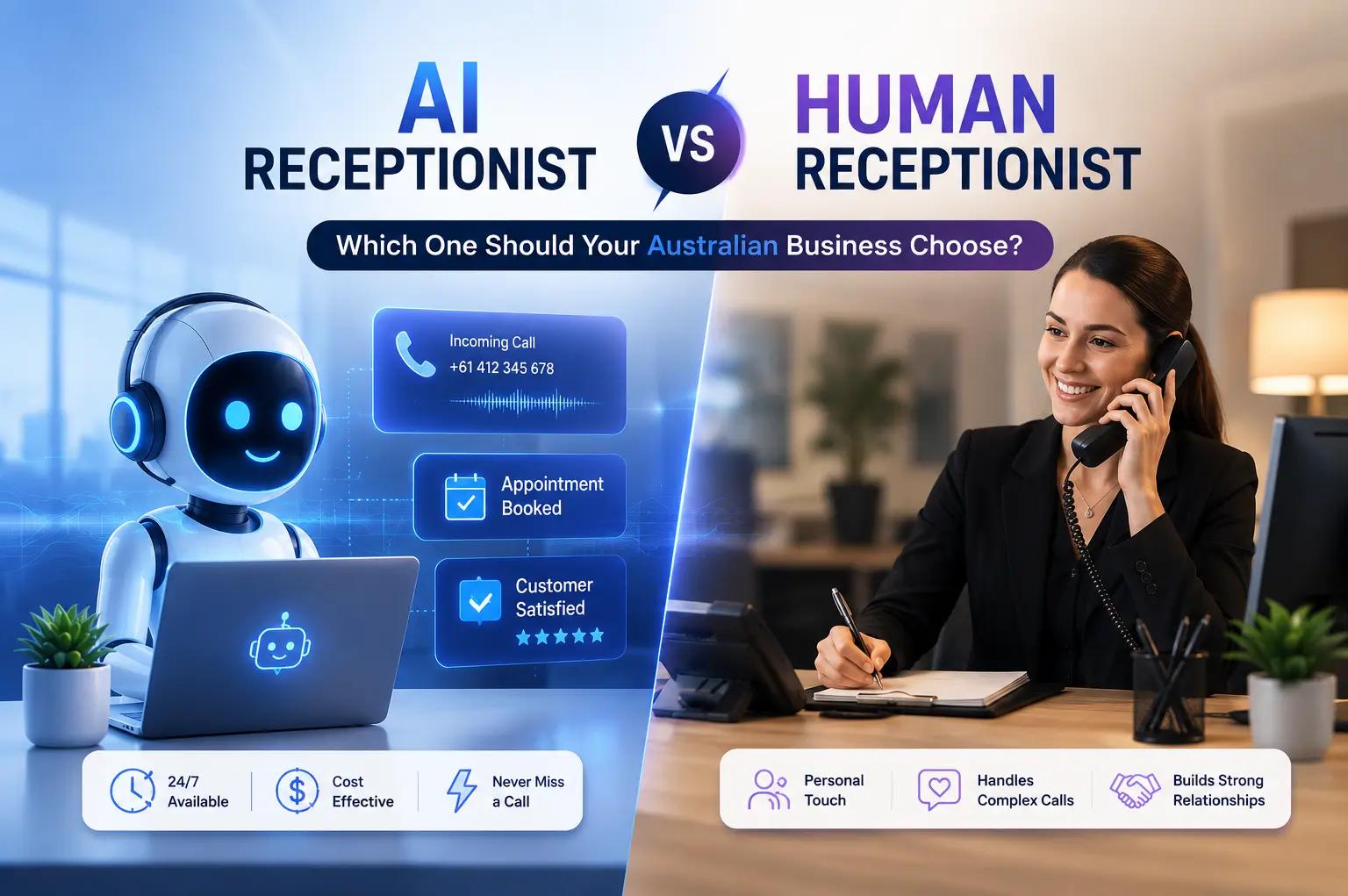
Choosing between an AI receptionist and a human receptionist depends on your business needs, budget, and customer expectations. While an AI receptionist offers 24/7 call answering, lower costs, and instant appointment booking, a human receptionist excels at face-to-face interactions and handling sensitive conversations. For many Australian businesses, the ideal solution is a hybrid approach—using AI to ensure every call is answered while staff focus on delivering exceptional in-person service.
Key Takeaways
Cost: A full-time receptionist in Australia typically costs AUD 60,000–70,000 a year with wages, super, and leave included. An AI Voice receptionist usually costs AUD 49–100 a month.
Availability: Human receptionists work set hours. AI receptionists work 24 hours a day, 7 days a week, including public holidays.
Call handling: A human can only take one call at a time. An AI voice receptionist can answer multiple calls at once, so no caller gets a busy signal or voicemail.
Best use case: Trades, real estate, clinics, and law firms lose the most money to missed calls these industries benefit fastest from an AI voice receptionist.
Limitation: AI still can't replace in-person greetings, physical office tasks, or handling a genuinely distressed customer with the same emotional read a person can.
Best setup: Combine both, let AI catch every call and book routine jobs, and let your team handle walk-ins, escalations, and relationship-building conversations.
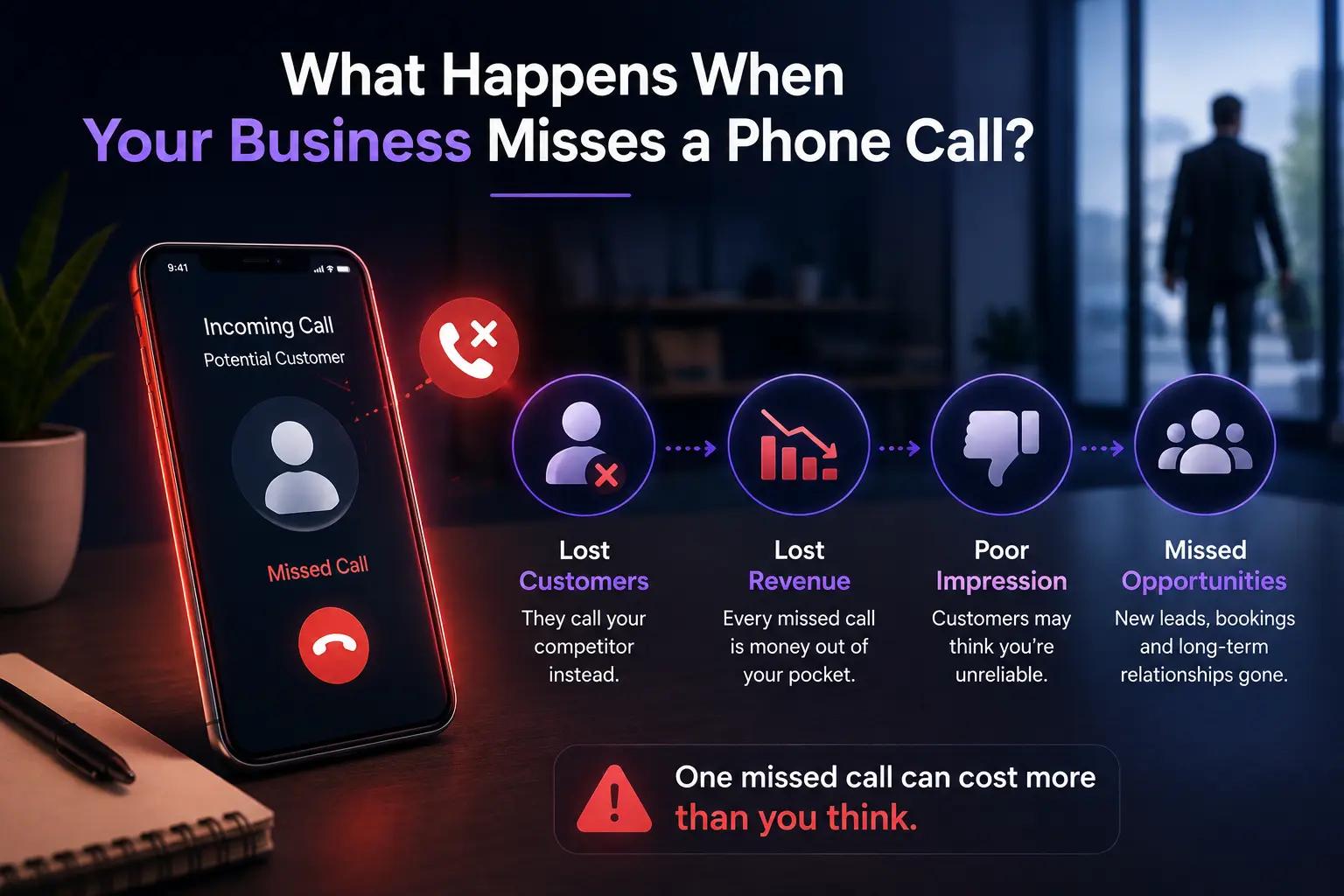
Every missed business call is a missed opportunity. If a plumber, dentist, or real estate agent doesn't pick up, the caller usually just rings the next business on the list.
That's the real problem this comparison is about. It's not "robots versus humans." It's about whether your business answers the phone every time and what it costs you if it doesn't.
This guide breaks down how AI receptionists and human receptionists actually compare on the things that matter: cost, hours, call handling, customer experience, and where each one still has the edge. By the end, you'll know which setup fits your business, or whether a mix of both makes the most sense.
What is a Human Receptionist?
A human receptionist or AI voice agent is a person who answers your calls, greets visitors, books appointments, and handles the small but important tasks that keep a front desk running, signing for deliveries, calming an upset customer, managing a meeting room.
Their biggest strength is judgment. They can read tone, pick up on urgency, and adapt to a conversation in ways that go beyond a script.
Their biggest limitation is capacity. They work fixed hours, take one call at a time, and like anyone have off days.
What is an AI Receptionist?
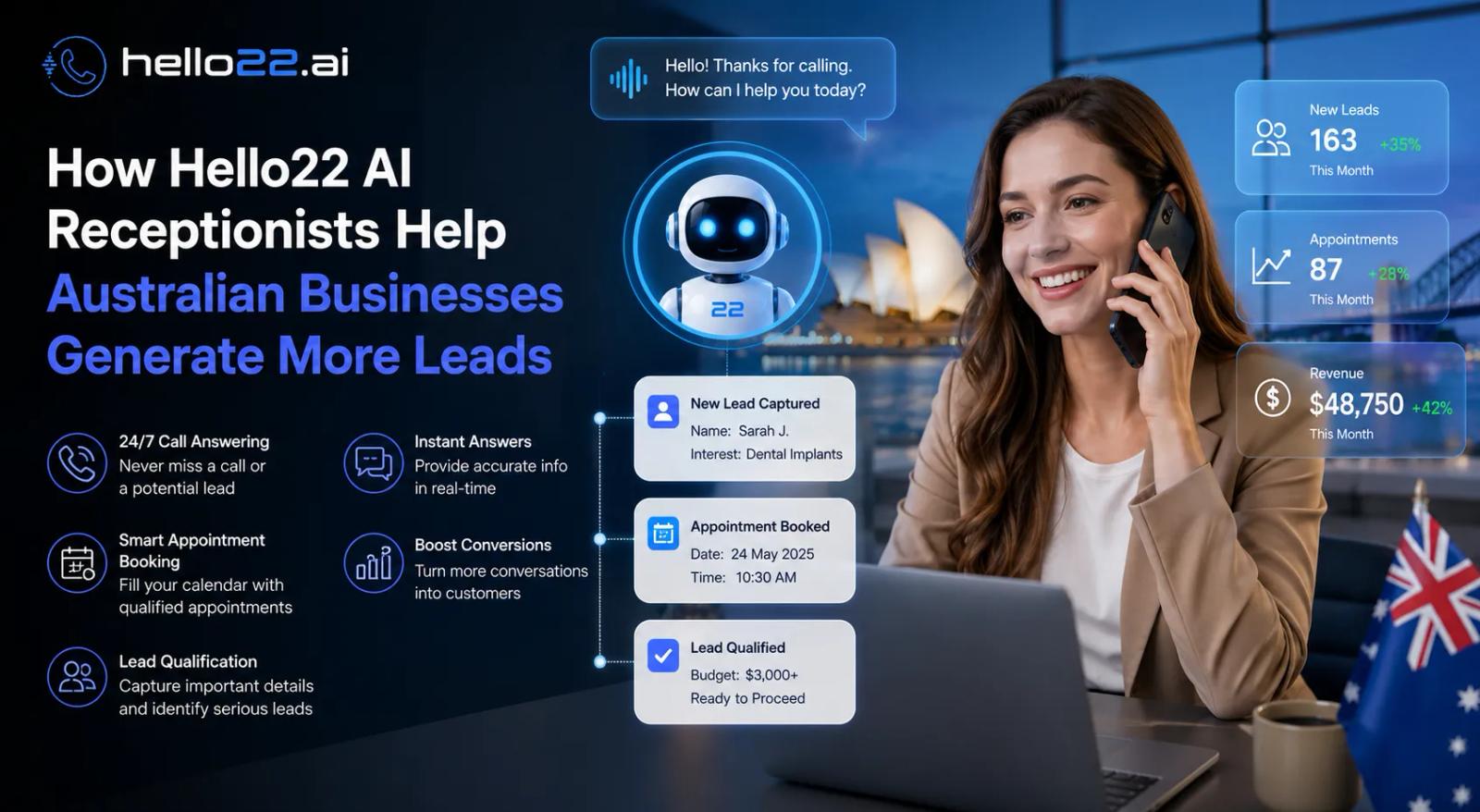
An AI receptionist is a voice-based software assistant that answers incoming calls, talks in a natural-sounding voice, answers common questions, checks your calendar, and books appointments then sends you a summary of the call.
It doesn't take breaks, doesn't get overwhelmed during a busy hour, and doesn't miss a call because three people rang at once. Providers like Hello22 AI build this specifically for trades and service businesses in Australia. The AI answers, books the job, and texts you the details before you've even seen the missed call notification.
AI Receptionist vs Human Receptionist: Full Comparison
Where AI Receptionists Win
AI wins decisively on cost, hours, and call capacity.
Cost. A full-time receptionist in Australia costs roughly AUD 60,000–70,000 a year once you include superannuation, leave entitlements, and other employment costs around AUD 5,000 a month for weekday-only coverage. An AI voice receptionist, like Hello22 AI, runs AUD 49–89 a month with no lock-in contract.
Availability. A human covers about 40 hours a week. An AI receptionist covers all 168 hours in a week nights, weekends, and public holidays included. If your busiest calls come in after 6pm, this matters a lot.
Call volume. A human can only speak to one caller at a time. If three people call at once, two of them hit voicemail and voicemail is where leads go to die. An AI voice receptionist answers every line simultaneously, so a sudden rush never turns into a missed opportunity.
Consistency. An AI receptionist asks the same questions and logs the same details on every single call. That means cleaner lead data and fewer "I forgot to ask for their address" moments.
Where Human Receptionists Still Win
Humans win on empathy, physical tasks, and genuinely complex or emotional situations.
In-person warmth. Someone needs to greet a walk-in client, offer them a seat, and make the office feel welcoming. No software can do that.
Emotionally difficult conversations. A grieving client, an angry customer, or a delicate price negotiation still needs a real person who can read the room and respond with genuine empathy.
Physical office tasks. Signing for parcels, managing keys, prepping meeting rooms these are hands-on jobs an AI voice agent simply can't do.
If your business depends heavily on face-to-face service or handles sensitive customer situations often, a human at the front desk is still hard to replace.
Real Cost Comparison in Australian Dollars
Hiring a receptionist costs about 60x more per year than an AI receptionist subscription.
As call volume grows, a human setup needs more staff and more payroll. An AI receptionist handles the extra volume at the same flat monthly price which is why the cost argument tends to be one-sided for high call volume businesses.
What Does a Call With an AI Receptionist Actually Sound Like?
Here's a typical example, start to finish:
The phone rings once and is answered immediately, with the AI greeting the caller using your business name.
The caller explains the problem is, say, a hot water system that's stopped working.
The AI asks a few clarifying questions: when did it happen, which suburb, is anything leaking right now?
It checks your calendar in real time and offers two open slots for the next morning.
The caller picks a time, and the AI confirms the booking on the spot.
Seconds later, you get a text summary with the caller's name, number, suburb, and problem the job is already on your books, and you never touched the phone.
Modern AI voice agents are designed to sound natural, with pauses and tone that mimic real conversation, so most callers can't tell the difference on a routine call.
Which Australian Businesses Should Consider Switching First?
Businesses where staff are rarely near a phone benefit the most.
Trades (plumbers, electricians, HVAC technicians): Hands-on work means missed calls are common, and each one can be a lost job.
Real estate agents: Often out at inspections when buyers or sellers call.
Cleaning and painting crews: On-site all day, away from the office phone.
Dental and medical clinics: Front desk staff are often tied up with in-person patients.
Immigration consultants and law firms: Intake calls are time-sensitive, and a missed one often means the caller moves to the next firm.
If your team spends most of the day away from a phone, an AI receptionist tends to pay for itself quickly.
Pros and Cons Summary
AI Receptionist / AI Voice Agent
Pros: Low monthly cost, 24/7 availability, handles multiple calls at once, consistent data capture, fast setup. Cons: Less effective for emotionally complex conversations, can't perform physical office tasks, needs a clear escalation path for edge cases.
Human Receptionist
Pros: Genuine empathy, strong judgment in sensitive situations, handles physical office duties, builds personal rapport. Cons: Higher cost, limited hours, one caller at a time, hiring and training take time.
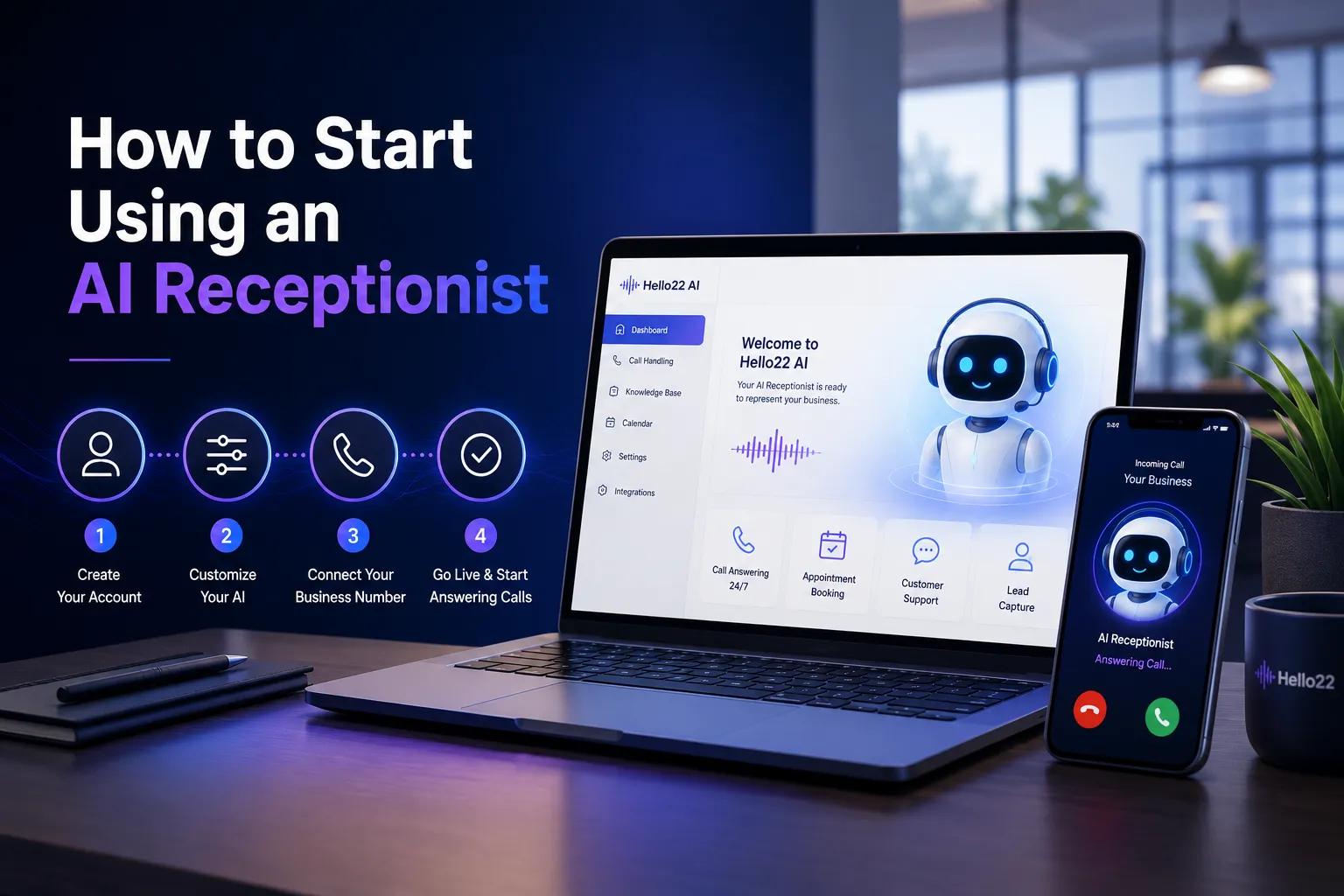
How to Start Using with Hello22 AI
Create Your Account - Sign up with Hello22 AI and choose the plan that best fits your business needs.
Customize Your AI - Select your preferred AI voice agent, business greeting, call handling rules, and connect your calendar so appointments can be booked automatically.
Connect Your Business Number - Link your existing phone number or get a new business number. Test a few calls to ensure everything works smoothly before going live.
Go Live & Start Answering Calls - Once your setup is complete, your AI receptionist is ready to answer calls 24/7, book appointments, capture leads, and transfer complex calls to your team when needed.
For most small and growing Australian businesses, an AI receptionist wins on the numbers it answers every call, covers every hour, and costs a fraction of a hire. A human receptionist still wins on warmth, judgment, and in-person service.
The strongest setup isn't choosing one over the other. It's letting AI catch every call and handle routine bookings, while your team focuses on the moments that need a genuine human touch.
Conclusion
The real question isn't "AI or human" it's whether your business is missing calls it can't afford to lose. A human receptionist brings empathy and personal service that AI still can't fully replicate. An AI receptionist brings 24/7 coverage and near-zero missed calls at a fraction of the cost.
For most Australian businesses, the biggest risk isn't adopting AI, it's letting calls go to voicemail while a competitor picks up instead.
Frequently Asked Questions
Does an AI receptionist sound robotic?
Modern AI receptionists use natural-sounding voices with realistic pacing and pauses. On routine calls, most callers can't tell they're speaking with an AI, and the tone can usually be matched to your brand.
Will an AI Voice Agent completely replace my human receptionist?
Usually not entirely. Most businesses use AI for overflow calls, after-hours coverage, and repetitive questions, while human staff focus on in-person service and complex conversations.
Can an AI Voice Agent actually book appointments into my calendar?
Yes. It checks your live calendar during the call, offers available time slots, books the appointment, and can send confirmations or handle rescheduling automatically.
Is caller data safe with an AI receptionist?
It should be, provided you choose a reputable provider that encrypts call recordings and transcripts and follows standard privacy practices. Always confirm data handling policies before signing up, especially if you're in a regulated industry.
How much does an AI receptionist cost compared to a human receptionist in Australia?
A full-time human receptionist typically costs AUD 60,000–70,000 a year including wages and entitlements. An AI receptionist usually costs AUD 49–89 a month, with no ongoing employment costs.
How quickly can I set up an AI receptionist or AI Voice Agent for my business?
Most providers, including Hello22 AI, let you go live within minutes you choose a ai voice agent, connect your calendar, and get a dedicated phone number without any coding required.
Which businesses benefit most from an AI receptionist?
Businesses where staff are frequently away from the phone benefit most trades, real estate agents, cleaning and painting crews, medical and dental clinics, and law or immigration firms handling time-sensitive intake calls.